
Your low back pain began less than six weeks ago.

Acute Low Back Pain Patient Resources
Acute Low Back Pain Patient Resources
Acute Low Back Pain: What You Need to Know
Low back pain that began within the past six weeks is considered acute. Most people improve over several weeks. Learn what you can do now, when to seek medical care, and how to prepare for a conversation with your health care professional. Use the checklist to prepare for your appointment
This information is intended for adults with acute low back pain lasting less than six weeks. It does not replace advice from a health care professional.
Acute low back pain at a glance
Most people begin to improve within several weeks.
Gentle activity and simple self-care can support recovery.
Routine imaging and opioids usually are not the first steps in treatment.
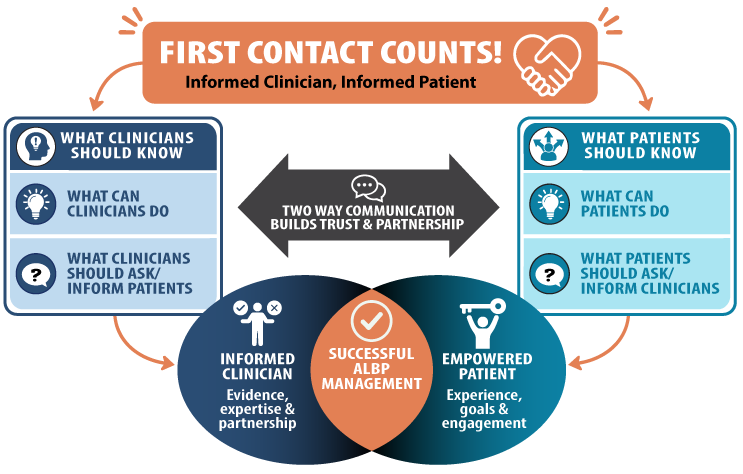
Your first conversation matters
Clear, two-way communication can help you understand your options and help your health care professional understand your symptoms, concerns, and recovery goals.
When to seek medical care
Seek immediate medical care if you experience:
- Loss of bladder or bowel control
- Numbness around the groin, genitals, or buttocks
- New or rapidly worsening weakness in one or both legs
- Severe or worsening back pain following a serious injury
- Fever or chills with back pain, particularly if you feel very ill
Contact a health care professional promptly if:
- Your pain is worsening instead of improving
- Your pain is not beginning to improve after one to two weeks
- Your pain significantly interferes with sleep or daily activities
- You have unexplained weight loss
- You have a history of cancer or risk factors for a serious infection
- You are concerned about new or changing symptoms
What you can do now
If you do not have warning signs, these steps may support your recovery:
- Continue gentle, low-impact activity within your comfort level.
- Take short walks and adjust activities based on your symptoms.
- Avoid prolonged bed rest.
- Consider using superficial heat.
- Ask a health care professional or pharmacist whether an over-the-counter anti-inflammatory medicine is safe for you.
- Track how pain affects movement, sleep, work, and daily activities, not only your pain number.
Prepare for your visit
Use the patient checklist to record:
- When the pain began and where you feel it
- Whether pain travels into your buttock, hip, or leg
- What makes the pain better or worse
- Any numbness, tingling, or weakness
- How pain affects your usual activities
- What you have already tried
Common questions about acute low back pain
Understanding what is—and is not—usually needed can help you take an active role in decisions about your care.
Do I need an MRI right away?
Most adults with new, uncomplicated low back pain do not need an X-ray, CT scan, or MRI during the first few weeks. Early imaging usually does not improve pain, function, or recovery unless symptoms or health risks suggest a more serious condition.
Should I stay in bed?
Prolonged bed rest can slow recovery. Unless a health care professional advises otherwise, gentle movement and usual low-impact activities are generally encouraged. Adjust what you do based on your symptoms.
Are opioids the best first treatment?
Opioids are not recommended as routine initial treatment for acute low back pain. They may cause serious harms and are generally considered only in selected circumstances when other options have not provided enough relief.
Questions to ask your health care professional
- What warning signs should I watch for?
- What can I safely do at home to support my recovery?
- Do I need imaging now? If not, when might it be appropriate?
- Which nonopioid treatment options are safe for me?
- When should I contact you if I am not improving?
Focus on function as well as pain
A pain number is only part of the picture. Tell your health care professional how the pain affects walking, sitting, sleeping, working, personal care, household tasks, exercise, mood, and concentration. This information can help you set practical goals and track your recovery.
Patient guides and resources
Download these resources to learn more, prepare for an appointment, and discuss care options with your health care professional.
Back Pain Check-In
Record your symptoms, the effect on daily activities, and what you have tried before speaking with a health care professional.
Download the checklist PDF
Myth vs Fact
Learn what the evidence says about imaging, movement, medication, and recovery from acute low back pain.
Download the Myth vs Fact PDF
Trusted Patient Resources
Explore reliable information and self-management resources from health care and public health organizations.
View the patient resources PDF
A Patient Advocate’s Perspective
Hear a patient advocate discuss communication, collaboration, and what patients experiencing acute low back pain need from their care team.
Listen to the podcastResources for health care professionals
Looking for the complete clinical recommendations, point-of-care tools, or continuing medical education?